Whirlybird Installation, Roof Vents & Ventilation Melbourne
Improve airflow and reduce heat and moisture in your roof space.
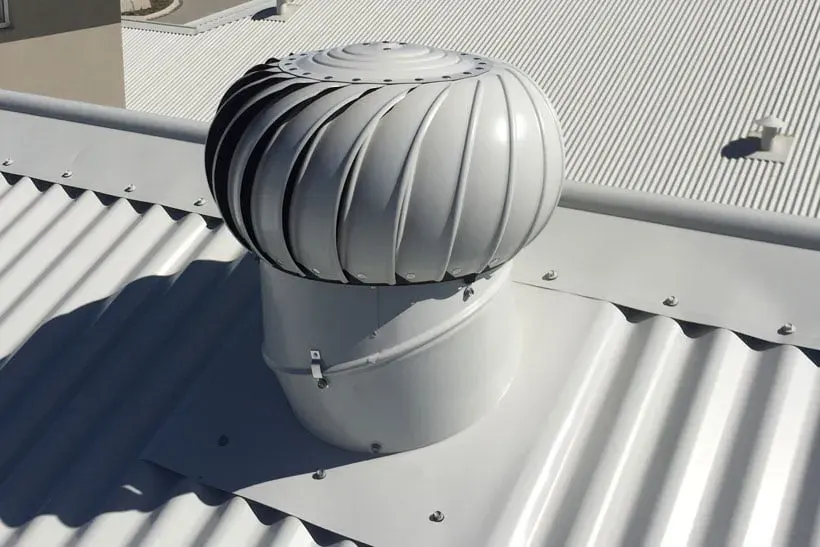
Whirlybirds and roof vents keep your roof space ventilated — reducing trapped heat in summer and moisture buildup that can lead to mould and rot. Roof Ready supplies, installs, replaces and repairs whirlybirds and roof vents across Melbourne.
Family-owned · Licensed & insured tradesmen · After-hours emergency inspections 7 days
Get a free whirlybird quote
Send us a few details and our team will be in touch. Obligation-free, no hidden costs — servicing Melbourne’s South East, Eastern suburbs and the Mornington Peninsula.
Call 1300 402 411A poorly ventilated roof cavity traps heat in summer and moisture in winter — pushing up cooling costs and creating the damp conditions that lead to mould and timber rot. Whirlybirds and roof vents fix that by continuously drawing the stale air out, and Roof Ready supplies, installs, replaces and repairs them right across Melbourne.
Whether you need a new vent installed or a wind-damaged whirlybird repaired or replaced, our team gets it done cleanly and watertight.
Roof ventilation for Melbourne homes
Melbourne roofs get punished from both directions. In summer a sealed roof cavity can sit far hotter than the rooms below it, and that heat radiates down through the ceiling all evening — long after the sun has gone. In winter the problem reverses: warm, damp air from showers, cooking and drying washing rises into a cold roof space, condenses on the underside of the roof and on the framing, and sits there. That is where mould, musty smells and slow timber rot start. Roof ventilation fixes both with the same mechanism — it keeps air moving through the cavity instead of letting it stall. Whirlybirds and roof vents are the simplest way to do it on a typical Melbourne home: they are wind-powered, so there is nothing to wire in and nothing to run, and once they are fitted and flashed properly they keep working year-round at no running cost.
How many whirlybirds does your roof need?
As a general guide, up to two whirlybirds per 90m² of roof space gives good ventilation — so a typical three-bedroom Melbourne home usually lands somewhere between two and four units. But the guide is a starting point, not an answer. What actually decides it is the volume of your roof cavity rather than the floor area beneath it, how much intake air the eaves can supply, whether the roof is split into separate cavities that do not share air, and which way the roof faces. A single whirlybird on a large cavity moves very little air; four on a small one is money spent for no extra benefit. It also matters that air can get IN — a whirlybird can only exhaust as much as the eaves let in, which is why a roof with blocked or sealed eaves under-performs no matter how many vents are on it. We work the number and the placement out on the roof during the free inspection and put it in the written quote, so you are not guessing and not over-buying.
What whirlybird installation costs in Melbourne
A Colorbond whirlybird supplied and installed typically costs $550 ex GST for the first unit. Each extra unit fitted on the same visit costs less, because the set-up and access are already paid for: around $475 for the second, $400 for the third and $325 for the fourth, all ex GST. So a typical three-unit install lands near $1,425 ex GST rather than three times the single-unit price. Your roof type affects the fitting work — cutting and flashing into tile is a different job from cutting into metal sheeting — and difficult access or a steep pitch can move the figure. Those are guide prices, not a quote: we confirm the number of units, the placement and an exact written price as part of a free inspection, and there is no charge for the inspection whether you go ahead or not.
Whirlybirds vs other roof vents — which is right for your roof?
The honest answer is that they do different jobs. A whirlybird is a rotary turbine: wind spins the head and that spinning actively draws air out of the cavity, so it moves considerably more air than a vent with no moving parts. A fixed or static roof vent has nothing to spin — it relies on hot air rising and escaping on its own, which is gentler, quieter and completely maintenance-free, but shifts far less volume. For most Melbourne homes with a genuine summer heat or winter condensation problem, whirlybirds are the ones that make the difference you can actually feel, and they still cost nothing to run because the wind does the work. Static vents make more sense where the cavity is small, where the roofline is highly visible and you want the least conspicuous option, or as extras alongside whirlybirds. Roof Ready supplies and installs both, and we will tell you on the roof which one your cavity actually needs — including telling you when you do not need as many as you thought.
Whirlybirds on tile and metal roofs
The unit is much the same on any roof; the part that decides whether you get a leak in three years is the flashing, and that is entirely roof-type specific. On a tiled roof the whirlybird sits on a base that has to be dressed into the tile profile so water running down the roof is carried around and past it — get the profile match wrong and the tiles lift or the base sits proud, and water finds the gap. On Colorbond and metal sheeting the base is cut and flashed into the ribs of the sheet and sealed to the correct side of the rib, so water is never travelling into the join. This is the reason whirlybird installation is roofing work rather than a handyman job, and it is why we do the flashing properly rather than relying on sealant to hold the job together. We install on tile, cement, terracotta, Colorbond and metal roofs across Melbourne.
Whirlybird repairs, replacement and noisy units
Whirlybirds do not last forever. The usual failures are a bearing that has seized so the head no longer spins, a unit that has started squealing or rattling in the wind, storm damage that has bent or partly lifted the head, and rust or perished sealant around the base — which is the one that turns a ventilation problem into a leak. A squeal or a rattle is often just a worn bearing and the unit can be repaired and re-secured rather than replaced. Where the head is damaged or the base has rusted out, replacing it is the better value, and we re-flash the base while we are up there so the new unit is watertight. If you have a whirlybird that has stopped turning, one that has started making noise, or a stain on the ceiling under an existing vent, that is worth a look before summer.
New homes, and what that pipe on the roof actually is
Two things come up constantly on newer homes. The first: most new builds arrive with little or no roof-cavity ventilation, which is why owners of two- and three-year-old houses are often the ones calling about a hot upstairs and a musty roof space. Whether your builder was required to allow for ventilation depends on the code provisions for your climate zone, roof type and construction, so that is a question for your builder or building surveyor rather than something we will guess at — what we can tell you is that fitting whirlybirds afterwards is straightforward and does not disturb the existing roof. The second: the pipe you can see sticking up through the roof of most new homes is usually not a vent for the roof space at all. It is the sanitary plumbing vent, which lets the drainage system breathe, or a flue for a heater or hot-water unit. It does nothing for the heat and moisture sitting in your ceiling cavity, so a house can have several of them and still have a roof space with no airflow at all. If you are not sure what you are looking at, we will tell you at the free inspection.
How we install a whirlybird
A thorough, step-by-step system for lasting results — no shortcuts.
- 1 Free Roof Inspection We get on the roof and into the roof space — checking the cavity size, how much intake air the eaves actually supply, and whether the roof is split into separate cavities that do not share air.
- 2 Sizing & Placement We work out how many units your roof genuinely needs and where they go — cavity volume, eave intake and roof aspect decide it, not floor area.
- 3 Written Quote You get the number of units, the placement and an exact written price before anything happens. The inspection and the quote are free whether you go ahead or not.
- 4 Cutting & Fitting The opening is cut to suit your roof — tile, cement, terracotta, Colorbond or metal sheeting.
- 5 Watertight Flashing The base is flashed so water running down the roof is carried around and past the unit, not into it. This is the step that decides whether you get a leak in three years, and it is why the job is roofing work.
- 6 Check & Clean Up We check the head spins freely, confirm the flashing is sealed, and leave the roof and the ground below as we found them.
Recent Whirlybirds & Roof Ventilation Work
Tap any photo to view it full screen.
Why Choose Roof Ready
Family-owned, over 20 years of experience, and genuinely passionate about keeping Melbourne roofs in great shape.
- Fast & Friendly Service
- Licensed & Insured Tradesmen
- Family-Owned
- Affordable Prices
- Obligation Free Quotes
- No Hidden Costs
- Skilled & Fully Qualified
- Servicing Melbourne
Rated 4.9★ by Melbourne homeowners — read our reviews:


Why Our Clients Rave About Us
-
“I would just like to say that Scott and his team have been fantastic during the roof repair and restoration that he's completed. Scott always kept me informed and consulted me throughout the process. He also completed a few odd jobs that I'd been putting off for a long time which is great. I would highly recommend Scott to anyone.”
Posted on Google -
“Prompt service. Scott is honest, reliable & he provides the best roofing options with high quality workmanship.”
Posted on Google -
“Scott is a prompt & good communicator who delivers what he promises, at an affordable price. Highly recommend Roof Ready.”
Posted on Google -
“Scott did a great job of fixing up our roof. I would highly recommend him.”
Posted on Google -
“Roof Ready repainted our roof and did a great quality job, was professional to deal with and well priced. Our 30 year old roof has come up looking brand new.”
Posted on Facebook -
“Great install of new roof panels, quick turn around and good price. Highly recommend.”
Posted on hipages
Frequently Asked Questions
Do whirlybirds really work?
Yes — they draw hot, moist air out of your roof cavity, which can significantly reduce roof-space temperature in summer and cut condensation, mould and odours. They are wind-powered, so they cost nothing to run.
Are whirlybirds better than roof vents?
They do different jobs. A whirlybird is a rotary turbine — wind spins the head and actively draws air out of the roof cavity, so it moves considerably more air than a vent with no moving parts. A fixed or static roof vent relies on hot air escaping on its own: quieter, completely maintenance-free, but far less volume. For a home with a real summer heat or winter condensation problem, whirlybirds are usually the ones that make a noticeable difference. We supply and install both, and we recommend the right mix for your cavity during the free inspection.
Is roof ventilation worth it?
For most Melbourne homes, yes — and the case is stronger in winter than people expect. Summer heat is the reason most people call, but the damage is usually done by winter condensation: warm damp air rising into a cold roof space, condensing on the underside of the roof and feeding mould and timber rot where you cannot see it. Wind-powered ventilation addresses both, costs nothing to run once fitted, and is one of the cheaper things you can do to a roof. If your upstairs rooms hold heat into the evening, or you have musty smells or dark patches in the roof space, it is worth a look.
How long do whirlybirds last?
A quality whirlybird that has been fitted and flashed properly should give you many years of service — they are simple, wind-powered and have only one moving part. What tends to fail first is the bearing, which shows up as a squeal, a rattle or a head that has stopped turning, and the sealant or flashing around the base. A seized or noisy unit can often be repaired and re-secured rather than replaced. We check existing whirlybirds as part of a roof inspection.
Do whirlybirds leak?
A correctly installed one should not. Leaks around a whirlybird almost always come down to the flashing at the base rather than the unit itself — the base has to be dressed into your tile profile or cut and sealed into the ribs of metal sheeting so water is carried around it, not into it. That is roofing work, and it is why we flash the base properly rather than relying on sealant. If you have a stain on the ceiling under an existing vent, that is a flashing problem worth looking at.
Do whirlybirds make noise?
A new whirlybird in good order is quiet — you may hear it turning in strong wind, and that is normal. Persistent squealing, grinding or rattling is not: it usually means a worn or seized bearing, or a head that has been knocked out of true by a storm. That is repairable, and often the unit can be re-secured rather than replaced.
Can you repair a noisy or wind-damaged whirlybird?
We repair, re-secure or replace seized, noisy and wind-damaged whirlybirds, and re-flash around the base so it stays watertight.
How many whirlybirds does my roof need?
As a general guide, up to two whirlybirds per 90m² of roof space gives good ventilation — the exact number depends on your roof size and cavity. We assess your roof and recommend the right number and placement during your free inspection.
How much does it cost to install a whirlybird?
A Colorbond whirlybird supplied and installed typically costs $550 ex GST for the first unit, and each extra unit fitted on the same visit costs less — around $475 for the second, $400 for the third and $325 for the fourth. Your roof type (tile or metal) affects the fitting work. Whirlybirds are wind-powered with no running costs, and we confirm the right number, placement and an exact written quote as part of a free inspection.
Are whirlybirds worth it in Australia?
For most Melbourne homes, yes. They’re wind-powered — so they cost nothing to run — and continuously draw hot air out of the roof cavity in summer and moisture out in winter, reducing heat load, condensation, mould and odours. As a guide, up to two whirlybirds per 90m² of roof space gives good ventilation.
Do plumbers install whirlybirds?
Some do — but the critical part of the job is cutting the roof and flashing the unit correctly for your tile profile or metal sheeting so it stays watertight. That’s roofing work. Roof Ready supplies, installs, replaces and repairs whirlybirds across Melbourne, and every install is flashed and sealed properly.
Will a whirlybird stop condensation?
It makes a real difference. By continuously exhausting humid air from the roof space, whirlybirds reduce the moisture that condenses on the underside of your roof — a common cause of mould and timber damage in Melbourne winters. For the best result the roof cavity needs adequate ventilation overall, which we assess during your free inspection.